Arthur Brown (The Crazy World of Arthur Brown)
Band members Related acts
|
line up 1 (1967-68) - Arthur Brown
(aka Arthur Wilton) -- vocals
- Sean Nichols (aka Nick Greenwood) -- bass
line up 2 (1968-69) - Arthur Brown (aka Arthur Wilton) - vocals - Sean Nichols - bass
line up 3 (1969-) - Arthur Brown (aka Arthur Wilton) - vocals
ine-up / Musicians - Arthur Brown / vocals With: - Android Funnel / guitar, producer (12-19) - Tony Hill / guitar (18) - Jonah Mitchell / organ - Bruce Langhorne / Mellotron (15) - George Kahn / saxophone - Simon House / electric violin (18) - Dennis Taylor / bass - Peter Pavli / bass & cello (12-19) - Drachen Theaker / drums, synth, tabla (12-19), producer (1-11) - Charles X / drums (18) Bass - Dennis Taylor Drums, Synth (Synthetophone) - Drachen Theaker Guitar - Android Funnel Organ - Jonah Mitchell Saxophone - George Khan Vocals - Arthur Brown
line up 4 (1969-) - Arthur Brown (aka Arthur Wilton) - vocals NEW - Dennis Taylor - bass (replaced Sean Nicholas)
line up 5 (1982) - Arthur Brown (aka Arthur Wilton) - vocals - Earl Mankey -- drum synthesizers - Ian Ota -- synthesizers, drums, percussion
|
- Asia (Carl Palmer) - The Big Band (Vincent Crane) - The Vincent Cheesman Trio - Craig (Carl Palmer) - VIncent Crane's Big Sound (Vincent Crane) - Dexy's Midnight
Runners (Vincent Crane - Chris Farlowe & the Thunderbirds (Carl Palmer) - Green Goddess (Vincent Crane - Peter Green's Katmandu (Vincent Crane) - Nick Greenwood (solo efforts) - Hazcham (Drachan Theaker) - High Tide (Drachan Theaker) - Lew HIrd's Austrailian Jazz Band (Vincent Crane) - Khan (Nick Greenwood) - Legacy (Carl Palmer) - The Simon Magus Band - Michael Moorcock's Deep Fix (Drachan Theaker) - The Carl Palmer Band (Carl Palmer) - PM (Carl Palmer) - The Puddletown Express (Drachan Theaker) - Oango (Carl Palmer) - Rustic Hinge (Drachan Theaker) - Stravinsky's Show (Drachan Theaker) - Word Engine (Vincent Crane
|
Genre: psych Rating: *** (3 stars) Title: The Crazy World of Arthur Brown Company: Track Catalog: SD-8190 Country/State: Yorkshire, UK Year: 1968 Grade (cover/record): VG+/VG+ Comments: minor ring, edge and corner wear Available: 1 Catalog ID: 7373 Price: $20.00
|
Here's a simple equation that serves as a decent career summary for Arthur Brown:
English + musician + eccentric = Arthur Brown
Today Arthur Brown's largely unknown, particularly to American audiences. If they recognize his name at all, it's almost certain as a result of his sole American hit; 1968's "Fire". That's unfortunate since over the ensuing years Brown's generated an extensive recording catalog; most of it unknown to all but hardcore collectors.
Having been expelled from the University of London, the mid-'60s found Arthur Wilton (aka Arthur Brown) pursuing a law degree at Reading University. Having formed a band to play parties and local clubs while earning some spending cash, graduating from college Brown dropped out of music and went into teaching. Having spent a couple of years working 9-to-5, in 1967 Brown decided teaching had been a mistake. Deciding music was his true calling he recruited keyboardist Vincent Crane, bassist N i k Greenwood (quickly replaced by Sean Nichols) and drummer Drachan Theaker for The Crazy World of Arthur Brown. Featuring an eccentric combination of comedy, theatrics and rock and roll, the band quickly garnered exposure on the London club circuit, including the trendy UFO Club. Among fans, The Who's Pete Townshend took an active interest in the band, eventually convincing executives at Track Records (the Who's label) to sign Brown and company to a recording contract.
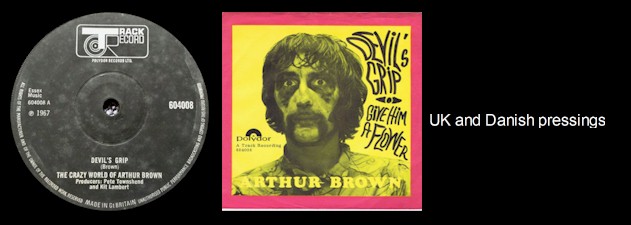
- 1967's "Devil's Grip" b/w "Give Him a Flower" (Track catalog number 60048)
While
the single did little, Track went ahead and green-lighted an album - 1967's "The Crazy World of Arthur
Brown." If you've never heard the collection, it
stood as one of the year's strangest offerings. The combination of Brown's ranting vocals, Crane's fire breathing
Hammond organ, combined with an-over-the-top stage show was unlike anything else on the market. Featuring a hodge-podge collection of musical genres, the album found the band taking stabs at a broad spectrum of styles, including
psychedelia, hard rock, jazz, Sinatra-styled crooning ("Come &
Buy"), and even R&
Unfortunately, success took its toll. Drummer Theaker was furious with
Lambert's production which buried the drums and added horn arrangements
throughout the set. Given Brown had agreed to the changes, within a
year Theaker had quit, replaced by Jeff Crane. Next Brown was hit
by a "Fire" copyright lawsuit; subsequently losing most of the royalties associated with
the song. Adding to the group's problems, while at a party the
bi-polar Crane was dosed with LSD. Left severely impaired, Crane had to drop out of the group and seek psychological help.
His replacement for the rest of the tour was Doug Henningham. Oh, the wonderful '60s ...
1.) Prelude/Nightmare (Arthur Brown) - 3:28 rating: *** stars The brief instrumental 'Prelude' showcased some attractive Crane orchestration with Brown's heavy breathing sound effects gave the song a mild "porno flick" soundtrack feel. "Prelude' wasn't even a minute long, leading to"Nightmare" with introduced Brown's instantly recognizable shrieking, demonic vocals against Crane's wild B-3 Hammond washes. Ever seen one of those '60s "B" flicks with the psychedelic dance party scene? Well, 'Nightmare' was the perfect soundtrack for one of those scenes; Brown's delivery really did sound possessed. It's not a promotional video, rather a clip taken from the 1968 film "Committee." Regardless, the black and white performance will give you a feel for how wild these guys were in a concert setting. Brown's the guy in the mask with the flames, Crane on organ and Teaker on drums: Arthur Brown - Nightmare (1968) (youtube.com) Nightmare was also tapped as the album's lead-off single:
-
1968's 'Nightmare' b/w 'What's Happening' (Track catalog number 2582) Well
the opening horn arrangement was unexpected, but Crane's jazzy-soul organ
was kind of '60s cool. Love Brown's spoken word vocals. How much
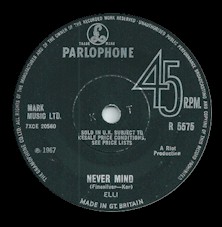
acid had the band taken at this point? Brown's creative and commercial zenith ... "Fire" had been a standard in their live act and was intended as the focal point for their planned concept album - reportedly built around the horrors of hell. Powered by Brown's wild vocals and Crane's organ fills, it's intense. Regardless, how can you not like a song that starts with Brown screaming "I am the god of Hellfire"? It's a classic one-hit wonder. Brown and Crane were initially listed as the writers, but Mike Finesilver and Peter Ker sued for co-credits and royalties, claiming the track had been copied from a song they'd penned for Elli Meyer - "Never Mind" Lots of references suggest the original song title was "Baby, You're a Long Way Behind" though no such title seems to exist. Interesting, other than the fact Crane and Theaker played on the track, I don't hear much similarity with "Fire".
"Fire" b/w "Rest Cure" (Track catalog number 45-2556)
It's
in black and white, but YouTube has a July1968 performance on the BBC's The
Top of the Pops that captures Brown in prime form complete with face paint,
flowing gowns and fire headgear: Fire
- The Crazy World Of Arthur Brown @ TOTP 1968 - YouTube Love his
dancing moods. Every
time I hear "Come and Buy" I envision Vincent Price fronting a demon
populated rock band. Perhaps not quite as commercial as 'Fire' but in
every other respect this one was as good, it not even better. Hearing
Brown's rapid-fire delivery on the chorus was a hoot. His voice was
just so weird ... Propelled
by Crane's Hammond, "Time" found the band starting out with an easy-going,
breezy ballad. Admittedly Brown's operatic delivery gave the song a
somewhat ominous aura. Framed by Crane orchestration, the spoken word
section wasn't nearly as enjoyable. In contrast 'Confusion' found the
band diving into a heavier, more conventional rock niche. (side 2) 1.) I Put a Spell on You (Screaming Jay Hawkins) - 3:41 rating: **** stars As
good as Brown's cover is (and I think it's one of the album highlights), it
remains a shadow of the Screaming Jay Hawkins original. As one of the
album's more conventional tines, I've always wondered why it wasn't tapped
as a single. So
"Spontaneous Apple Creation"
might serve as a good public service ad for the dangers associated with
excessive use of LSD and other illicit substances ... Not much in
terms of melody, or rhythm, but scores pretty high on the bizarre scale.
Powered
by a nice Nichols' bass line, "Rest Cure" found Brown and company taking a
stab at blue-eyed soul. Probably the album's most commercial song, you
weren't going to mistake this one for The Young Rascals, but it was weird
enough to spin a couple of times. Not
sure why producer Lambert didn't like
Theaker's drumming. He sounded pretty good to me on the faux James
Brown-styled "I've Got Money". I have to admit that Brown actually
sounded pretty good on this one. Starting out with an English music hall vibe, "Children of My Kingdom" quickly moving into R&B and jazzy territory. A rarity in that Brown didn't sound out of his mind, it featured one of the album's stronger melodies and stands as a track that's grown on me over the years. Reportedly this was one of two tracks that featured John Marshall on drums.
©
Scott R. Blackerby December 2021
|
|
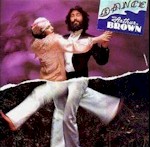
Genre: progressive Rating: *** (3 stars) Title: Dance with Arthur Brown Company: Gull Catalog: GULP 1008 Country/State: UK Year: 1974 Grade (cover/record): VG+/VG+ Comments: -- Available: 1 Catalog ID: not yet listed Price: $15.00
|
Produced by Roger Bain and released by the small Gull label (which I think was distributed by Motown in the States), 1975's "Dance with Arthur Brown" was bound for instant obscurity. That was truly unfortunate since the set found Brown in good, if typically eclectic form throughout. While certainly not as demented as his debut, the album still exhibited it's share of English eccentricity. Perhaps the biggest surprise came from how good a singer Brown was. Anyone who knew him from the crazed "Fire" was bound to be surprised by the energy he brought to material such as the disco-tinged cover of "We've Got To Get Out of This Place", the ballad "Helen with the Sun" and "Take a Chance". While catchy and commercial, much of Brown's own material (the '20s flavored "Crazy" and "Quietly with Tact") was simply too English for American audiences. Elsewhere, Brown's two religious numbers ("The Lord Will Find a Way" and "Is There Nothing Beyond God") were among the oddest tracks - I've always wondered if the signaled some sort of religious rebirth, or he was simply goofing around. Not instantly likeable (I remember playing it once and dumping it in my "sell" pile), but an album that gets better the more you play it. Needless to say, the set vanished without a trace, though Motown seems to have printed a ton of copies since I see the set quite a bit in area cutout bins.
"Dance
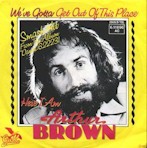
with Arthur Brown" track listing: 1.) We've Got To Get Out of This Place (Barry Mann - Cynthia Weil) - rating: *** stars Hum, Brown opts for a stab at disco ... well this was recorded in 1975 so I guess there was a cultural defense for the song. With Brown screaming over a funky rhythm built on Pete Solley's keyboards and Steve Yorke's bass, the results weren't actually that bad, sounding a bit like something the band Santa Esmeralda was charting with during the timeframe. While there were better tunes on the album, this is the one that was tapped as the single.
- 1975's "We've Got To Get Out of This Place" b/w "Here I Am" (Gull catalog number GULS 13)
2.) Helen with the Sun (Andy Dalby - Leslie Adey) - rating: **** stars I've always liked Brown's weird sing-song, almost operatic voice ... His voice is simply unique and though I can't begin to explain it, he's always sounded great on mid-tempo rockers like "Helen with the Sun". 'Course the song's secret weapons came in the form of former Kingdom Come compatriot Andy Dalby's gorgeous lead guitar and Lee Robinson's melodic bass line. Great tune that had some FM radio potential. 3.) Take a Chance (Arthur Brown) - rating: **** stars "Take a Chance" was another song that showcased how good the eclectic Brown could be. Surrounded by one of his better melodies (including some jittery Kevin Elliott Moog and George Kahn's jazzy sax), the song somehow managed to cram pop moves, '50s rock, "world music" touches, and an elaborate, quasi-progressive structure into something that was more than the sum of it's parts. One of the standout performances on the album. 4.) Crazy (Arthur Brown) - rating: ** stars "Crazy" caught Brown at his campiest ... kind of a '20s/'30s flapper feel that didn't do a great deal for me. 5.) Hearts and Minds (Arthur Brown) rating: **** stars Based on Lee Robinson's killer bass line and Keith Tippets piano, "Hearts and Minds" was the album's most outright commercial tune. Geez, the song even had castanets !!! Hard to understand why this one wasn't tapped as the single.
(side
2) The song would have been a lot stronger without the shrill backing singers ... As it was, the title track was a moody, slightly reggae-tinged performance showcasing some nice Drachen Teaker percussion touches and another nice vocal from Brown. But those backing singers ... 2.) Out of Time (Mick Jagger - Keith Richards) - rating: *** stars Wasn't sure what to expect from the Stones cover ... In this case Brown stretched the tune out, giving it an almost country-tinge. Interesting if it wasn't going to make you forget the original. 3.) Quietly with Tact (Andy Dalby - Leslie Adey) - rating: ** stars The album's second real disappointment, "Quietly with Tact" was a nice enough pop ballad, but the song found Brown employing his most cloying voice which, combined with the over-reaching backing singers, effectively sucked the energy out of the tune. Nice lead guitar from Andy Dalby. 4.) Soul Garden (Arthur Brown) - rating: *** stars Judging by the performance credits and the overall sound - pure reggae, "Soul Garden" was recorded at different sessions that the rest of the album. Not bad, but not particularly memorable. The genre wasn't something that suited Brown all that well. 5.) The Lord Will Find a Way (Lee Robinson) - rating: *** stars I've never been able to tell whether Brown was playing it straight on "The Lord Will Find a Way". Written by bassist Lee Robinson, the song wasn't bad, showcasing an upbeat, Moog-propelled Gospel revival feel. Complete with Gospel chorus and Brown vamping along at the end, you were left to wonder. Hum, Arthur Brown as a born-again Christian ... guess I've heard of stranger things. 6.) Is There Nothing Beyond God (Arthur Brown) - rating: ** stars One of six Brown originals, "Is There Nothing Beyond God" was built on a nifty little funky riff, but sounded like a demo that hadn't been finished. Lyrically there wasn't anything here - just Brown repeating the title refrain over and over and over ...
©
Scott R. Blackerby December 2021
|
|
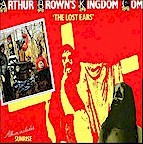
Genre: progressive Rating: **** (4 stars) Title: The Lost Ears Company: Gull Catalog: SDGU 2003/4 Country/State: UK Year: 1976 Grade (cover/record): VG+/VG+ Comments: double album; gatefold sleeve Available: 1 Catalog ID: not yet listed Price: $30.00
|
Clocking in at an some 90 minutes (at times it
seems endless), 1976's "The Lost Ears"
was a 22 track, double album retrospective. While the album included
material covering the 1968-72 timeframe, the primary focus was on Brown's
previous efforts with Kingdom Come. The results were understandably mixed. Highlights include the sci-fi epic
"Time Captives, "The Hymn" (one of Brown's prettier melodies)
and "Spirit Of Joy". At the other end
of the spectrum, the instrumental "Gypsy Escape", "The
Traffic Light Song" and
"Conception" (Brown apparently trying to howl like a wolf), were
seemingly included to highlight the artist's more
eccentric sides. While the majority of material was pulled from
previously released sources, it worth
noting Brown remixed most of the collection.
Elsewhere the set included three previously
unreleased Puddletown Express efforts ("Space Plucks (including Dem Bones)",
"So High Up Here" and "Through the Planets"). The
liner notes included entertaining excerpts from a 1976 interview Brown
granted Melody Maker's Chris Welch. By the way, the hit ("Fire") isn't here.
(The album was originally released with a gatefold sleeve.)
|
|
Genre: progressive Rating: ** (2 stars) Title: Speaknotech Company: Republic Catalog: -- Country/State: UK Year: 1982 Grade (cover/record): VG+/VG+ Comments: picture disc Available: SOLD Catalog ID: SOLD 7372 Price: SOLD $40.00
|
In the early 1980s Arthur Brown moved to Austin, Texas where he ended up starting a house painting business with former Mothers of Invention drummer Jimmy Carl Black. Brown remained active in music initially toying with the idea of recording an album under Peter Gabriel's tutelage, but ultimately decided against the project. In 1981 he started recording with producer Craig Leon (best known for his work with groups like Blondie, The Ramones and Suicide), and local musicians Scott Morgan and Ian Ota. Prior to releasing the album Morgan was brought in to remix the tapes. Released by the small Austin-based Republic Records, "Speaknotech" (Speak No Tech), was suitably eclectic. Complete with low tech Atari game console-styled synthesizer burps and gurgles, Kraftwerk-ish tape loops and various oddball sound effects, tracks like "King of England", "Conversations'"and "Strange Romance" made it clear Brown had been listening to more than his share of early-1980s American and English new wave and synthesizer bands while adding his own unique lyrical and vocal imprints on the results. Picture David Byrne as a middle aged, oddball Englishman and you wouldn't be that far off the general sound and aural atmosphere on this one. Weirdest of the weird - a truly bizarre cover of Buddy Holly's "Not Fade Away", the spoken word narrative "The Morning was Cold" and the oddball title track where Brown recalled something that Roxy Music might have done as a joke. Imagine Holly reincarnated as a Martian new wave act ... While the LP's sound hasn't aged all that well, like much of Brown's catalog there's something fascinating about the resulting low tech meltdown. Ever been driving somewhere and slowed down to check out a bad traffic accident? The carnage is horrible and you pray that nobody involved was seriously hurt, but by the same token you can't take your eyes off the mess. That was actually a surprisingly decent analogy for vast parts of this release ! Yeah this one was way strange, even for the eclectic Brown !!!
"Speaknotech"
track listing:
1.) King of England (Arthur Brown - Craig Leon) - rating: **** stars Admittedly "King of England'"started out sounding like a fire alarm going amuck, but who would have thought Brown would be able to mash-up English history and a decent rock melody ? The video quality wasn't great (filmed by someone in the upper balcony), but YouTube has an impressive 1993 performance of the tune at London's Marquee Club: https://www.youtube.com/watch?v=hqC8N5x7_II 2.) Conversations (Arthur Brown - Craig Leon) - 4:27 rating: ** stars Hum, overlooking the Atari-styled synthesizers, "Conversations" sounded like Brown had been listening to way too much Devo. Hum, this was a good way to make '80s music pedestrian and boring. 3.) Strange Romance (Arthur Brown - Craig Leon) - rating: *** stars "Strange Romance" was at least a little more in keeping with Brown's quirky reputation, though the synthesizers had a hideous '80s sound. You had to admit Brown's voice was still in great shape. 4.) Not Fade Away (Hardin - Petty) - rating: ** stars Ever wanted to hear Devo record a Buddy Holly classic ? Well, here's your chance ... Imagine r2d2 singing with a fake Elvis twang and you'll get a general idea of what Brown's performance sounded like. 5.) The Morning was Cold (Arthur Brown - Craig Leon) - rating: ** stars The cold synthesizer pattern was definitely headache inducing (imagine a car running on a a cylinder) ... Hum, why did it remind me of Kraftwerk ? Brown's dour spoken word monologue didn't make this any more enjoyable.
(side
2) The title track was basically Brown caterwauling over a bland and totally forgettable synthesizer melody. Hum, possibly the perfect theme song for Luddites ... 2.) Name As Names (Arthur Brown - Craig Leon) - rating: **** stars Well, "Name As Names" at least started out with a catchy rhythm pattern and found Brown trotting out what sounded like a Peter Gabriel impression. Wonder if this was something recovered from the aborted project he undertook with Gabriel. 3.) Love Lady (Arthur Brown - Craig Leon) - rating; *** stars The album's most conventional performance, though the arrangement built on jabbering synthesizers didn't make all that much of an impression. 4.) Big Guns Don't Lie (Arthur Brown - Craig Leon) - 5:00 rating; *** stars In contrast to some of the tunes on this set, "Big Guns Don't Lie" at least had something approaching a recognizable melody. The arrangement was pretty barebones; Brown accompanied by drums and synthesizer washes. Admittedly it was also a bit short in the lyric department - Brown basically repeating the title over and over and over and then changing things up by repeating 'fortresses can fall ... 5.) Take a Picture (Arthur Brown - Craig Leon) - rating; *** stars So I'm going to give this one an extra star for the multi-tracked vocal arrangement. I'm then going to take away a star for the Atari synthesizers. What you get is 3 stars + 1 star (vocal arrangement) - 1 star (synthesizers) = 3 stars.
In 1997 the Voiceprint label reissued the collection in CD format (catalog number VP124CD) along with five bonus tracks:
1.) You Don't Know (1965) 2.) Old Friend My Colleague (1990) 3.) Lost My Soul In London (1990) Joined Forever (1990) 4.) Mandala (1987) 5.) Desert Floor (1987)
© Scott R. Blackerby December 2021
|
|
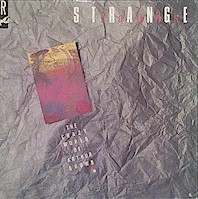
Genre: progressive Rating: ** (2 stars) Title: Strangeands Company: Reckless Catalog: RECK 2 Country/State: UK Year: 1988 Grade (cover/record): VG+/VG+ Comments: -- Available: 1 Catalog ID: -- Price: $40.00
|
s.
"Strangelands" track listing: 1.) Part One: The Country Life Jacket LOL - Given Track and Atlantic had been unhappy with Brown's original album, a quick listen to "Life Jacket" makes it clear why the album was shelved. Imagine the normally whacked out Brown spinning out of controlled after having been dosed with some potent LSD. This was essentially
Purple Airport The Lord Doesn't Want You 2.) Part Two: The City The Sound Of The City 3.) Part Three: The Cosmos All Forms And Distinctions Beyond The Sea Planets Of The Universe Twisted Wreckage Hold On Cosmos 4.) Part Four: The Afterlife Endless Sleep
B1 n the late 1960s, the Crazy World of Arthur Brown's popularity was such that the group shared bills with the Who, Jimi Hendrix, the Mothers of Invention, the Doors, the Small Faces, and Joe Cocker, among others.[8] However, the band's second studio album, Strangelands, although set to be released in 1969, was shelved by the band's record label due to lacking sales potential (although it would later be released in 1988). The band would soon break up a year later, in 1970, with Crane and fellow member Carl Palmer forming Atomic Rooster, Theaker joining the band Love, and Brown joining the group Kingdom Come. Palmer would later co-found Emerson, Lake & Palmer and Asia. Since then, the lineup has seen several changes. After the success of their debut, the band recorded their second studio album, titled Strangelands. The album was intended for release in 1969, but it was shelved by their label over concerns that it lacked sales potential. The album featured a more experimental and avant-garde sound that shed the pop sensibilities of the Crazy World's debut. Strangelands was eventually issued in 1988, although this was 19 years after the album was supposed to release. The new lineup in 1969 (which by then included Brown, Greenwood, Crane, and Palmer) practically dissolved on the band's US tour in June 1969. Crane and Palmer left to form Atomic Rooster, Greenwood, known as Sean Nicholas during his time in the band, went on to Khan[18] where he performed under the name Nick Greenwood. Jeff Cutler, Dick Heninghem, and Pete Solley would take their places, although Dick Heninghem left the same year he joined, and the band would break up in 1970. The band released the album Strangelands in 1970 and a live album "Order From Chaos" in 1993. Arthur Brown eventually formed Arthur Brown's Kingdom Come in 1970. Recorded in the late 1960s, but not issued until the late 1980s, this is Arthur Brown's missing second album. Had it appeared right after it was recorded, it would have bewildered listeners to no end. Brown was no longer weird in an accessible and entertaining fashion -- he was just weird, period. It's as if he decided to do his debut album over again, but concentrated almost exclusively on the hellish dissonance bits that linked, opened, and closed some tracks, rather than the songs themselves. Loosely arranged as a suite divided into the four parts of "The Country," "The City," "The Cosmos," and "The Afterlife," it's untuneful and demented stuff that owes at least as much to free improv jazz as psychedelic rock. It's also much heavier on the operatic vocal histrionics and unfathomably metaphysical lyrics, with few of the R&B-grounded organ riffs that helped put his debut album into the Top Ten. The one song that sounds as if it could have -- just barely -- fit onto the first Crazy World album is "Planets of the Universe," with its floating organ and lilting, melodious vocals, although these unexpectedly cut into a busk of "Dem Bones." A distraught, lo-fi cover of the '50s death rock hit "Endless Sleep" ends the strange, sprawling, messy affair. User Reviews Track Listing THE CRAZY WORLD OF ARTHUR BROWN was a short-lived act that initially only existed from 1967 - 70 but in its early three year tenure Arthur and friends released one of the seminal releases of the late 1960s that not only spawned a multi-national hit with the single “Fire” but was instrumental in ushering in the worlds of progressive rock as well as shock rock that would ignite the 1970s like Brown’s famous metal headwear that took rock stage performances to a whole new level. This band was like a massive star that burned bright and then burned out quickly but left behind a legacy and an album that is still revered more than a half century later. The original team that crafted the band’s one and only self-titled release of the era consisted of Arthur Brown himself on vocals known for his outlandish stage charisma, Vincent Crane on Hammond organ and orchestral arrangements, Nicholas Greenwood on bass and Drachen Theaker on drums. The band was literally on “Fire” during 1968 with a hit single that peaked at #7 in the US and #2 in the UK as well as an early progressively minded rock album that contributed in redefining the possibilities of rock music. But all good things come to end, some shorter than other and by 1969 the members had grown restless and the band imploded. Crane would soon start Atomic Rooster while Greenwood would go on to join Steve Hillage in Khan, another band Jonesy as well as recording his own solo album. The lineup lasted long enough for one classic album and no more yet Arthur Brown himself wanted to continue his CRAZY WORLD so he recruited a long list of guest musicians and set out to record what was suppose to be the second album under THE CRAZY WORLD OF ARTHUR BROWN moniker. The debut release offered the perfect mix of easy to follow blues rock melodies with pop sensibilities decorated with bizarre avant-garde intros, intermissions and extended passages. When it came to crafting his followup STRANGELANDS, Brown eschewed the easy on the ears pop sensibilities and went for the avant-garde jugular as he steered his musical style far away from the money-making machine that spawned his hit single “Fire.” Turned out it wasn’t the best move. Considered to be the logical intermission between Brown’s debut and his soon-to-be psychedelic prog band Kingdom Come, STRANGELANDS was recorded in 1969 and very much lived up to its album title however the good folks at the record company were having none of this this bizarre improved musical freakery that took metaphysical abstractness in the lyrics to unthinkable bizarre new realities and a stylistic shift from predict singable songwriting to avant-experimentalism that had more in common with free jazz than anything remotely rock and roll. The album was scrapped and remained in the vaults for almost 20 years after its initial recording in late 1969. The album wouldn’t see the light of day until 1988 but has retrospectively been considered a belated prog masterpiece by some and utter dross by many more. In reality the album falls somewhere in between those extremes on the spectrum. Although Arthur Brown himself was the attention getter with this shock rock stage performances of face paint which would inspire Alice Cooper, Marilyn Manson and the entire genre of black metal that would come, on the musical composition side the band’s debut was forged by a unique marriage of the disciplined classically trained musical approach of Vincent Crane who crafted music in a logical linear way and the more experimental free range approach of drummer Drachen Theaker. Theaker being the only musician to stay on board to record STRANGELANDS had more influence this time around and his avant-garde weirdness became the dominant force that Brown was more than willing to explore. Greenwood is said to have been the least musical explorative and in many ways kept the other three from getting too weird too fast. STRANGELANDS retains the tones and timbres of the band’s self-titled album of 1968 but instead of focusing on the melodies and pop sensibilities of the debut, this time around Brown expanded all those crazy avant-garde sounds that provided the intros, intermissions and extended freakery. The result was an album that featured a range of instrumental parts that played more independently as if each musician existed in his own world and the individual parts were somehow forged together like a musical chimera on the Isle of Dr Moreau. Rather than lush keyboards supporting a main melodic theme, now the keys went rogue into extreme psychedelic weirdness not unlike some of the trippiest Krautrock to come while the percussion forged by Theaker looked more toward the world of avant-jazz for bizarre otherworldly technical workouts closer to something from avant-percussionist Han Bennink than anything from the up til then rock paradigm. While this album has the reputation of being complete musical gibberish, that is not the case at all. It may require a few listening sessions to unravel the musical complexities at hand but each musician has been assigned an expanded musical motif that extends beyond the typical for the day “coming together” for a unified musical motif. Operating much like the avant-prog excesses of Henry Cow that would emerge in a few short years, Brown was once again ahead of the pack with his relentless drive to innovate. Unfortunately few were willing to immerse their senses in music this dense and alien to their musical sensibilities however i personally don’t really buy that because by 1969 several avant-rock release had emerged including Captain Beefheart’s own “Trout Mask Replica” which STRANGELANDS is often compared to due to the fact that Theaker had personally known and played with the great Don Van Vliet, who inspired much of the approach. Although it’s impossible to decipher given the abstractness of this recording, STRANGELANDS is loosely arranged into four parts titled "The Country," "The City," "The Cosmos," and "The Afterlife,” most of which feature multiple suites. The album was far more instrumental and the musical motifs took every liberty to escape the confines of any established musical paradigm. With acts like Frank Zappa & The Mothers of Invention and his pal Captain Beefheart, the avant-garde genie was truly out of the bottle and Brown himself had caught the bug. Ironically the only real connection to the debut other than the tones and timbres of the keyboards is the vocal style of Brown himself albeit this time around he excelled at a more exaggerated histrionic form of operatic theatricality. The album basically plays out as Brown pummeling the senses with philosophical metaphysical concepts while the musicians color the musical palette with improvisational impressions rather than belting out unambiguous bravado. This is one strange bird right from the opening “Life Jacket” right down to the final cover of the 1950’s song “Endless Sleep.” Steeped in the excesses of Beefheart’s “Trout Mask Replica” with the musical fortitude of space cadet Sun Ra meets the free floating spirit of The Velvet Underground, STRANGELANDS more than lives up to its album title and is by all means an acquired taste if one can palette such things in any dosage. This album was really cutting edge and ahead of its time in many ways and although scrapped initially has been rediscovered as the album that showcases Brown’s true mad genius that would, once tamed a bit, usher in his new stint with Kingdom Come whose three albums have become progressive rock classics in their own right. For those who love the most bizarre and demanding musical expressions to be found, this late 60s oddity is right up your alley.
ruly a complete change of direction, these tracks, recorded in 1969 as a possible follow-up to their phenomenal debut, were deemed too "out there", even for this artist. Seemingly completely drug fueled, the album is highly experimental avant gard, with very fractious, seemingly incoherent excursions into insanity, featuring Brown's various ramblings and wailings amidst pretty much free-form instrumental backing. Though surely intended to be psychedelic, it's value as such to fans of the genre are subjective at best. My attraction to this type of mat'l is also quite subjective, but I was able to get into the groove on this one, at least what little groove I was able to find. It's an acquired taste to say the least, and few will find it consistently good, but I liked sections of it. Grades - 2 B's, 1 B-, 4 C+'s, and 2 C-'s. Unpublished by mod [Rating30672004] Phallus_Dei Apr 18 2023 +1 Head-scratching followup that sat on the shelf for 20 years due to a record exec's lack of vision. No, this isn't "Fire," and it's not "Trout Mask" either, though it's probably just as challenging as that. Most give up after a few listens, and the generic 80s cover of the original doesn't offer much reason to commit (thankfully, the cover for the Swordfish reissue is more striking). I first started to "crack the code" when I began to imagine that Arthur Brown was really Tom Jones on acid, backed by bewildered session musicians struggling to keep up. Once I stopped trying to make sense of the "songs" and treated it more like a holistic experience, the joy and the unexpected beauty of Strangelands emerged. Some parallels could be made to the instant composition style of recording later perfected by Can and Faust. You get the sense that much of the session was left on the cutting room floor. What remains is certainly strange, but also inspiring, and perhaps even brilliant, in its skewed take-me-as-I-am defiance. Published [Rating195528293] siLLy_puPPy Jun 05 20224.00 stars THE CRAZY WORLD OF ARTHUR BROWN was a short-lived act that initially only existed from 1967 - 70 but in its early three year tenure Arthur and friends released one of the seminal releases of the late 1960s that not only spawned a multi-national hit with the single “Fire” but was instrumental in ushering in the worlds of progressive rock as well as shock rock that would ignite the 1970s like Brown’s famous metal headwear that took rock stage performances to a whole new level. This band was like a massive star that burned bright and then burned out quickly but left behind a legacy and an album that is still revered more than a half century later. The original team that crafted the band’s one and only self-titled release of the era consisted of Arthur Brown himself on vocals known for his outlandish stage charisma, Vincent Crane on Hammond organ and orchestral arrangements, Nicholas Greenwood on bass and Drachen Theaker on drums. The band was literally on “Fire” during 1968 with a hit single that peaked at #7 in the US and #2 in the UK as well as an early progressively minded rock album that contributed in redefining the possibilities of rock music. But all good things come to end, some shorter than other and by 1969 the members had grown restless and the band imploded. Crane would soon start Atomic Rooster while Greenwood would go on to join Steve Hillage in Khan, another band Jonesy as well as recording his own solo album. The lineup lasted long enough for one classic album and no more yet Arthur Brown himself wanted to continue his CRAZY WORLD so he recruited a long list of guest musicians and set out to record what was suppose to be the second album under THE CRAZY WORLD OF ARTHUR BROWN moniker. The debut release offered the perfect mix of easy to follow blues rock melodies with pop sensibilities decorated with bizarre avant-garde intros, intermissions and extended passages. When it came to crafting his followup STRANGELANDS, Brown eschewed the easy on the ears pop sensibilities and went for the avant-garde jugular as he steered his musical style far away from the money-making machine that spawned his hit single “Fire.” Turned out it wasn’t the best move. Considered to be the logical intermission between Brown’s debut and his soon-to-be psychedelic prog band Kingdom Come, STRANGELANDS was recorded in 1969 and very much lived up to its album title however the good folks at the record company were having none of this this bizarre improved musical freakery that took metaphysical abstractness in the lyrics to unthinkable bizarre new realities and a stylistic shift from predict singable songwriting to avant-experimentalism that had more in common with free jazz than anything remotely rock and roll. The album was scrapped and remained in the vaults for almost 20 years after its initial recording in late 1969. The album wouldn’t see the light of day until 1988 but has retrospectively been considered a belated prog masterpiece by some and utter dross by many more. In reality the album falls somewhere in between those extremes on the spectrum. Although Arthur Brown himself was the attention getter with this shock rock stage performances of face paint which would inspire Alice Cooper, Marilyn Manson and the entire genre of black metal that would come, on the musical composition side the band’s debut was forged by a unique marriage of the disciplined classically trained musical approach of Vincent Crane who crafted music in a logical linear way and the more experimental free range approach of drummer Drachen Theaker. Theaker being the only musician to stay on board to record STRANGELANDS had more influence this time around and his avant-garde weirdness became the dominant force that Brown was more than willing to explore. Greenwood is said to have been the least musical explorative and in many ways kept the other three from getting too weird too fast. STRANGELANDS retains the tones and timbres of the band’s self-titled album of 1968 but instead of focusing on the melodies and pop sensibilities of the debut, this time around Brown expanded all those crazy avant-garde sounds that provided the intros, intermissions and extended freakery. The result was an album that featured a range of instrumental parts that played more independently as if each musician existed in his own world and the individual parts were somehow forged together like a musical chimera on the Isle of Dr Moreau. Rather than lush keyboards supporting a main melodic theme, now the keys went rogue into extreme psychedelic weirdness not unlike some of the trippiest Krautrock to come while the percussion forged by Theaker looked more toward the world of avant-jazz for bizarre otherworldly technical workouts closer to something from avant-percussionist Han Bennink than anything from the up til then rock paradigm. While this album has the reputation of being complete musical gibberish, that is not the case at all. It may require a few listening sessions to unravel the musical complexities at hand but each musician has been assigned an expanded musical motif that extends beyond the typical for the day “coming together” for a unified musical motif. Operating much like the avant-prog excesses of Henry Cow that would emerge in a few short years, Brown was once again ahead of the pack with his relentless drive to innovate. Unfortunately few were willing to immerse their senses in music this dense and alien to their musical sensibilities however i personally don’t really buy that because by 1969 several avant-rock release had emerged including Captain Beefheart’s own “Trout Mask Replica” which STRANGELANDS is often compared to due to the fact that Theaker had personally known and played with the great Don Van Vliet, who inspired much of the approach. Although it’s impossible to decipher given the abstractness of this recording, STRANGELANDS is loosely arranged into four parts titled "The Country," "The City," "The Cosmos," and "The Afterlife,” most of which feature multiple suites. The album was far more instrumental and the musical motifs took every liberty to escape the confines of any established musical paradigm. With acts like Frank Zappa & The Mothers of Invention and his pal Captain Beefheart, the avant-garde genie was truly out of the bottle and Brown himself had caught the bug. Ironically the only real connection to the debut other than the tones and timbres of the keyboards is the vocal style of Brown himself albeit this time around he excelled at a more exaggerated histrionic form of operatic theatricality. The album basically plays out as Brown pummeling the senses with philosophical metaphysical concepts while the musicians color the musical palette with improvisational impressions rather than belting out unambiguous bravado. This is one strange bird right from the opening “Life Jacket” right down to the final cover of the 1950’s song “Endless Sleep.” Steeped in the excesses of Beefheart’s “Trout Mask Replica” with the musical fortitude of space cadet Sun Ra meets the free floating spirit of The Velvet Underground, STRANGELANDS more than lives up to its album title and is by all means an acquired taste if one can palette such things in any dosage. This album was really cutting edge and ahead of its time in many ways and although scrapped initially has been rediscovered as the album that showcases Brown’s true mad genius that would, once tamed a bit, usher in his new stint with Kingdom Come whose three albums have become progressive rock classics in their own right. For those who love the most bizarre and demanding musical expressions to be found, this late 60s oddity is right up your alley. Published [Rating173616645] googoogjoob42 Aug 31 20202.50 stars The "lost" Arthur Brown album; but it's not actually a missing link between Crazy World and Kingdom Come so much as a digressive blind alley of a record. There's a clear throughline between the freaky, moody, theatrical material on the self-titled Crazy World album and the more-ambitious and more-overtly-progressive but similarly freaky, moody, theatrical material on the albums Brown did with Kingdom Come. This album tries very hard to be freaky, is intermittently moody, and is rarely theatrical. Most of it is formless psychedelic-ish instrumental noodling, with Arthur Brown mumbling, yelping, and talking over it, often incomprehensibly. None of the noodling has much energy or power to it, and Brown himself is uncharacteristically subdued and uninspired. Most of the tracks just kind of blur together into a haze of organ, bass, drums, and mumbling. By far the best part of the album is Planets of the Universe, an actual song, apparently cowritten with Vincent Crane before his split from Arthur Brown; it features a delicate, painfully beautiful organ motif and has a unique, dreamy vibe. It got rerecorded in a new version- sans Dem Bones interlude, and with the bridge moved to a later medley on the album- as "Space Plucks," for the first Kingdom Come album. (All Forms and Distinctions also got remade as Creation.) The rest of the material on this album disappeared without a trace, more or less justly. The contents of this album are basically a reflection of the circumstances of its creation: The Crazy World of Arthur Brown had imploded in June 1969, after Vincent Crane and Carl Palmer had taken off to start Atomic Rooster. Eventually, in mid-late 1970, Arthur Brown would start assembling Kingdom Come, his second proper band, with whom he'd achieve probably his greatest artistic success, though no great commercial success. In between these two events, Brown reunited with original Crazy World drummer Drachen Theaker in an abortive attempt to put together a new lineup of Crazy World, based and recording in Puddletown, Dorset. (A remnant of this lineup would tour as "The Puddletown Express," and this evolved into Rustic Hinge.) None of the musicians other than Theaker had any prior association with Brown, and none of them would go on to join Kingdom Come. This is the resulting album, unreleased at the time. It's a bunch of tentative noodly jamming by a group of musicians who aren't quite used to each other yet, with very little pre-written material to structure things; it's actually very much akin to Jam, the album of loose, tentative jams by an early lineup of Kingdom Come, though Jam is more consistently entertaining. If this stuff had been better, or if they had had more time to develop it and get to functioning as a band, then things might have turned out very differently; but as it is, this is a less-than-essential footnote to Arthur Brown's career. This is worth hearing once if you're into Arthur Brown's other work, and it makes for pleasant if moody background music, but it's very definitely a minor album. Published [Rating135509852] Somewhere between Pere Ubu's New Picnic Time and Tim Buckley's Starsailor. Everything's not great here, but it's quite entertaining and interesting - if you ask me ... Published [Rating63498430] Bobr Nov 01 20121.50 stars ???????????, ?? ??????? ? ??????? ??????? ??????????? ???????, ??????????? ????? ????????, ??????? ??? ????????? ??, ??? ????? Captain Beefheart. ??? ??? ????????? ???? ?????????, ?? ???????? ???? ?????? ??? ?? ?????????... Published [Rating48836411] tagomago Nov 28 20113.00 stars Musically I love this album. What this incarnation of The Crazy World of Arthur Brown (who would later become Rustic Hinge) is doing on this album is fantastic avant-garde rock pre-figuring the Rock-In-Opposition movement about two years. Unfortunately there is one weak link and that is Arthur Brown himself. Having heard similar styles of music (although not for a full album) attempted by the likes of Edgar Broughton or Kevin Ayers, I have an idea of how this type of music is supposed to sound and it's not an avant-garde band with some geeky theatrical boob screaming in a quasi operatic voice over top the music. Try to imagine Henry Cow, Samla Mammas Manna or Faust fronted by Chris Farlowe and you pretty much get the idea of what this album is like. Published [Rating41662636] The material included on this album was supposed to be the 2nd album by British singer Arthur Brown and his group called The Crazy World Of Arthur Brown". Although recorded shortly after the debut, it remained unreleased for almost 20 years and remains mostly completely unknown to most music lovers. The material is mostly avant-garde and years ahead of its time, so the fact that it was rejected at the time is no surprise, but in retrospect this is fascinating music. Emphasizing instrumental improvisations and a less harmonic music and Brown's manic vocals the overall effect is absolutely stunning, somewhere between Psychedelics and Jazz. Several brilliant musicians participate, including legendary saxophonist George Khan and drummer Drachen Theaker. I'm sorry but I simply love every minute of this stuff and proclaim once again that Brown was / is one of the greatest British music geniuses in spite the fact that very few people share my view on this. Your loss mates! Attribution: http://www.adambaruch.com/blog.asp?year=2011&month=05 Published [Rating37410070] ECLEC 2258 CD (2011) lanky_caravan Oct 29 20091.00 stars Truly, one of the worst albums I have ever heard Published [Rating25800040] Tovan Jan 07 20082.00 stars Arthur Brown seems to have been a bit lost between the Crazy World of... album and the excellent Kingdom Come works. This is mostly free form nonsense. Not recommended. Published [Rating13113435] Crazyworldof Jun 06 20061.50 stars Hoping for more of the same as the classic "Crazy World of...", this album turned out to be a huge disappointment. I sold the album soon after purchase and cannot remember a thing about it, other than it was nothing like the début, being quite in an entirely different ball-park and quite avant garde. A bit of a noise if truth be told. Shame. Published [Rating5086419] ADVERTISEMENT This album is supposedly the second album of The Crazy World Of Arthur Brown (recorded in the late 60's or early 70's but not released befotre 88) and I can tell that indeed this album is crazy and even insane. So insane that this comes across as even wilder than anything Kingdom Come had done also. So insane that even after a three week stint in my deck getting regular rotation , I cannot seem to even grasp the slightest hint of the eventual concept behind this album. It might have come with liner notes , but this is a Voiceprint release , so I suppose this might have been a bit too much to ask of them. This album is obscure , psychic , weird (but this IS Arthur Brown) and voluntary done so , but unfortunately this is impenetrable for me but also to the few buddies of mine that have heard this. The sound quality is apt , but no miracle is to be expected as this was never released at the time. I suppose that some progheads might appreciate this album butit is likely to please more the space rock fans. I will give this album a third star on the benefit of the doubt and as a mark of respect for Arthur Brown , but also in the hope that I might one day see better what this album is about. 0 social review comments | Review Permalink Posted Monday, October 31, 2005 | Review this album | Report (Review #54084) Review by GruvanDahlman PROG REVIEWER 2 stars ...and along came Arthur, one of the most extravagant and brilliant musicians of the day. From the bluesy origins of the british boom he took the bold step into territory rarely tread before him. Mad as a hatter, obviously, but equipped with the most focused of minds, visionary and brave he set forth digging out a piece of the musical world that belonged to him and him alone. The first album was a sort of compromise between blues and progressive rock which turned out really well. I suppose the album made quite an impact with it's theatrical vocals and scary, to be frank, compositions. Yet I cannot feel that the album was anything but a compromise where Brown constrained himself beyond his strength to make an album that would appeal to parts or any of the audience. Why? Simply because the next album he recorded, yet never saw released back then, was a chaotic piece of musical tapestry far beyond any normal mind. The album was in fact abnormal. The only sane thing about it is it's title, Strangelands, which encapsulates everything the album is. Strange and set in a strange land. To listen to this album you need to be prepared for something beyond complex. There are no songs or epics in the normal sense. What you get is a bunch of musicians painting a canvas of distorted, twisted and deranged motives, with colours able to scare you. Sort of like a horror movie twisting your brain. You will not find structure. Well, that's not completely true. I will explain. The Arthur Brown band of 1969 is the equivalent of modern day Mayhem, the norwegian black metal band. The reason for this statement is the immaculate ability to walk the ever so thin line between utter chaos and some sense of structure. Buried between the chaos you do find traces of order, proof of the true visions and musical skill possessed by the band, or both bands in this case. That is the scary part, the slight presence of order in a chaotic setting. Sort of like a workplace for orchs, really. Amidst all that chaos and devestation they do manage to build something that's both functional and impressive, given the circumstances. With all that said, I must bear witness and let my personal feelings fly high, which, all things concerned is the purpose of reviews, and proclaim that this is not particularily enjoyable. I find it intriguing and interesting but not enjoyable. There are no real paths to follow and no real songs to endear me. The only real reward is after the album is over is the feeling of being impressed by how anyone is able to produce something like this. That is impressive but does not transform the music into anything other than noise, albeit with a sugar coating. (Though the coating must have gone off.) I recommend you, if you like Arthur Brown, to give it a spin or two since it is a sort of progressional phase. "Galactic zoo dossier" was totally different and "Kingdom Come" (my favorite) is a sort of blend between the latter and "Strangelands". Purely an interesting note in the annals of Brown. Conclusion: I'll give this album two stars, based only only on the fact that it is an impressive piece of work. That's all. 0 social review comments | Review Permalink Posted Tuesday, August 5, 2014 | Review this album | Report (Review #1235235) Review by siLLy puPPy SPECIAL COLLABORATOR PSIKE, JRF/Canterbury, P Metal, Eclectic 4 stars THE CRAZY WORLD OF ARTHUR BROWN was a short-lived act that initially only existed from 1967 - 70 but in its early three year tenure Arthur and friends released one of the seminal releases of the late 1960s that not only spawned a multi-national hit with the single "Fire" but was instrumental in ushering in the worlds of progressive rock as well as shock rock that would ignite the 1970s like Brown's famous metal headwear that took rock stage performances to a whole new level. This band was like a massive star that burned bright and then burned out quickly but left behind a legacy and an album that is still revered more than a half century later. The original team that crafted the band's one and only self-titled release of the era consisted of Arthur Brown himself on vocals known for his outlandish stage charisma, Vincent Crane on Hammond organ and orchestral arrangements, Nicholas Greenwood on bass and Drachen Theaker on drums. The band was literally on "Fire" during 1968 with a hit single that peaked at #7 in the US and #2 in the UK as well as an early progressively minded rock album that contributed in redefining the possibilities of rock music. But all good things come to end, some shorter than other and by 1969 the members had grown restless and the band imploded. Crane would soon start Atomic Rooster while Greenwood would go on to join Steve Hillage in Khan, another band Jonesy as well as recording his own solo album. The lineup lasted long enough for one classic album and no more yet Arthur Brown himself wanted to continue his CRAZY WORLD so he recruited a long list of guest musicians and set out to record what was suppose to be the second album under THE CRAZY WORLD OF ARTHUR BROWN moniker. The debut release offered the perfect mix of easy to follow blues rock melodies with pop sensibilities decorated with bizarre avant-garde intros, intermissions and extended passages. When it came to crafting his followup STRANGELANDS, Brown eschewed the easy on the ears pop sensibilities and went for the avant-garde jugular as he steered his musical style far away from the money-making machine that spawned his hit single "Fire." Turned out it wasn't the best move. Considered to be the logical intermission between Brown's debut and his soon-to-be psychedelic prog band Kingdom Come, STRANGELANDS was recorded in 1969 and very much lived up to its album title however the good folks at the record company were having none of this this bizarre improved musical freakery that took metaphysical abstractness in the lyrics to unthinkable bizarre new realities and a stylistic shift from predict singable songwriting to avant-experimentalism that had more in common with free jazz than anything remotely rock and roll. The album was scrapped and remained in the vaults for almost 20 years after its initial recording in late 1969. The album wouldn't see the light of day until 1988 but has retrospectively been considered a belated prog masterpiece by some and utter dross by many more. In reality the album falls somewhere in between those extremes on the spectrum. Although Arthur Brown himself was the attention getter with this shock rock stage performances of face paint which would inspire Alice Cooper, Marilyn Manson and the entire genre of black metal that would come, on the musical composition side the band's debut was forged by a unique marriage of the disciplined classically trained musical approach of Vincent Crane who crafted music in a logical linear way and the more experimental free range approach of drummer Drachen Theaker. Theaker being the only musician to stay on board to record STRANGELANDS had more influence this time around and his avant-garde weirdness became the dominant force that Brown was more than willing to explore. Greenwood is said to have been the least musical explorative and in many ways kept the other three from getting too weird too fast. STRANGELANDS retains the tones and timbres of the band's self-titled album of 1968 but instead of focusing on the melodies and pop sensibilities of the debut, this time around Brown expanded all those crazy avant-garde sounds that provided the intros, intermissions and extended freakery. The result was an album that featured a range of instrumental parts that played more independently as if each musician existed in his own world and the individual parts were somehow forged together like a musical chimera on the Isle of Dr Moreau. Rather than lush keyboards supporting a main melodic theme, now the keys went rogue into extreme psychedelic weirdness not unlike some of the trippiest Krautrock to come while the percussion forged by Theaker looked more toward the world of avant-jazz for bizarre otherworldly technical workouts closer to something from avant-percussionist Han Bennink than anything from the up til then rock paradigm. While this album has the reputation of being complete musical gibberish, that is not the case at all. It may require a few listening sessions to unravel the musical complexities at hand but each musician has been assigned an expanded musical motif that extends beyond the typical for the day "coming together" for a unified musical motif. Operating much like the avant-prog excesses of Henry Cow that would emerge in a few short years, Brown was once again ahead of the pack with his relentless drive to innovate. Unfortunately few were willing to immerse their senses in music this dense and alien to their musical sensibilities however i personally don't really buy that because by 1969 several avant-rock release had emerged including Captain Beefheart's own "Trout Mask Replica" which STRANGELANDS is often compared to due to the fact that Theaker had personally known and played with the great Don Van Vliet, who inspired much of the approach. Although it's impossible to decipher given the abstractness of this recording, STRANGELANDS is loosely arranged into four parts titled "The Country," "The City," "The Cosmos," and "The Afterlife," most of which feature multiple suites. The album was far more instrumental and the musical motifs took every liberty to escape the confines of any established musical paradigm. With acts like Frank Zappa & The Mothers of Invention and his pal Captain Beefheart, the avant-garde genie was truly out of the bottle and Brown himself had caught the bug. Ironically the only real connection to the debut other than the tones and timbres of the keyboards is the vocal style of Brown himself albeit this time around he excelled at a more exaggerated histrionic form of operatic theatricality. The album basically plays out as Brown pummeling the senses with philosophical metaphysical concepts while the musicians color the musical palette with improvisational impressions rather than belting out unambiguous bravado. This is one strange bird right from the opening "Life Jacket" right down to the final cover of the 1950's song "Endless Sleep." Steeped in the excesses of Beefheart's "Trout Mask Replica" with the musical fortitude of space cadet Sun Ra meets the free floating spirit of The Velvet Underground, STRANGELANDS more than lives up to its album title and is by all means an acquired taste if one can palette such things in any dosage. This album was really cutting edge and ahead of its time in many ways and although scrapped initially has been rediscovered as the album that showcases Brown's true mad genius that would, once tamed a bit, usher in his new stint with Kingdom Come whose three albums have become progressive rock classics in their own right. For those who love the most bizarre and demanding musical expressions to be found, this late 60s oddity is right up your alley. 0 social review comments | Review Permalink Posted Sunday, June 5, 2022 | Review this album | Report (Review #2758566) Latest members reviews 4 stars This album is just too crazy. I doubt the musicians were concious when recording this album. Although it lacks any concept, its first three pieces (Country, City and Cosmos) are all products of the same jam session. I'm sure I've never heard Drachen drumming so good and the organist is playing ... (read more) Report this review (#864768) | Posted by gietek | Thursday, November 22, 2012 | Review Permanlink Post a review of THE ARTHUR BROWN BAND "The Crazy World Of Arthur Brown: Strangelands" You must be a forum member to post a review, please register here if you are not. trangelands was arthur's band after "crazy world" split up. the material here was written and performed in '69. esoteric has done another great job in reissuing, with excellent sound quality (24-bit digital remastering) and good liner notes. musically, sad to say, i find this pretty weak material. it really has an incomplete feel to it. granted, it was all improvised and certainly feels the part. couple of the songs, "all forms and distinctions" and "planets of the universe" were re-recorded for the great "galactic zoo dossier" release. aside from strangelands, there are some rustic hinge recordings added to the cd. different line up with the exception of drachen theaker on drums. the last track i hoped would salvage the cd because it had tony hill and simon house from high tide on, didn't. strangelands is an interesting cd, but only for a couple of listens. sad, because i really enjoy arthur brown and his great voice. this is more for the brown completist than new fan. 3 people found this helpful Helpful Report Rancho DeLuxe 2.0 out of 5 stars NOT the Arthur brown you're looking for... Reviewed in the United States on March 15, 2018 Verified Purchase This actually sounds like it was compiled to fulfill contractual obligations ( Like that Lou Reed double album from the 70's). I suffered through it but I likely won't listen to it again. I sampled the later "Zim Zam Zim" and I think THAT is the Arthur Brown that I'm looking to hear. It's not that I don't appreciate innovation but there is very little of Brown's awesome voice on the CD. If he were to perform ANY of this album live, I can't imaging what it would look like visually; maybe he would just bang a tambourine. I agree with the other reviewer that this is very likely for the collector who completes collections. Helpful Report Sector 4.0 out of 5 stars Arthur's Hidden Secret Reviewed in the United States on June 3, 2011 Verified Purchase This album contins some great moments and includes some material from the later release 'Galactic Zoo Dosier'. Very experimental and bizzare in some parts but that's what you would expect from an Arthur Brown album. One person found this helpful Helpful Report See more reviews Top reviews from other countries Translate all reviews to English ERIC HALLIENNE 3.0 out of 5 stars arthur le dingue Reviewed in France on June 27, 2011 Verified Purchase Digne émule de Screamin Jay Hawkins, Arthur Brown a eu un hit mémorable fin 1968 avec "Fire". Son chant composé de divers cris et autres peut irriter. A priori cet album daterait de 1969. Etait il sorti à l'époque ? En tout cas je préfère toute la 2ème partie instrumentale (à cause des vocalises folles d'Arthur ?) Report Translate review to English Bryan Scarborough 5.0 out of 5 stars Five Stars Reviewed in the United Kingdom on December 2, 2015 Verified Purchase Enjoyable - but a bit of a 'curate's egg'. This album is just too crazy. I doubt the musicians were concious when recording this album. Although it lacks any concept, its first three pieces (Country, City and Cosmos) are all products of the same jam session. I'm sure I've never heard Drachen drumming so good and the organist is playing such a weird set of chords that je ne sais quoi. I think even Vincent's playing wasn't that crazy. The woodwinds make a great addition to the psychedelia (the bassoon and the flute on this album are just... well... crazy!). I absolutely love The Replicas part - and if you thought the organist playing with Arthur was mad, then the guitarist surely was his great master. I'm absolutely certain I've never heard anyone play a guitar like this. There is some kind of robotic structure to the sound - I mean... you need to sniff a tone of coke to start playing like this. And Arthur's singing is superb! We mustn't forget Arthur! The way he does The Lord Doesnt Want You is just so intense! And keep in mind that it was only a jam session. Loopy music for loopy ears. Theaker said there were hours of recorded material. I wish I could listen to the whole session. Gave 4 stars because I understand this music is just too hard to listen to. strangelands was arthur's band after "crazy world" split up. the material here was written and performed in '69. esoteric has done another great job in reissuing, with excellent sound quality (24-bit digital remastering) and good liner notes. musically, sad to say, i find this pretty weak material. it really has an incomplete feel to it. granted, it was all improvised and certainly feels the part. couple of the songs, "all forms and distinctions" and "planets of the universe" were re-recorded for the great "galactic zoo dossier" release. aside from strangelands, there are some rustic hinge recordings added to the cd. different line up with the exception of drachen theaker on drums. the last track i hoped would salvage the cd because it had tony hill and simon house from high tide on, didn't. strangelands is an interesting cd, but only for a couple of listens. sad, because i really enjoy arthur brown and his great voice. this is more for the brown completist than new fan. 3 people found this helpful Helpful Report Rancho DeLuxe 2.0 out of 5 stars NOT the Arthur brown you're looking for... Reviewed in the United States on March 15, 2018 Verified Purchase This actually sounds like it was compiled to fulfill contractual obligations ( Like that Lou Reed double album from the 70's). I suffered through it but I likely won't listen to it again. I sampled the later "Zim Zam Zim" and I think THAT is the Arthur Brown that I'm looking to hear. It's not that I don't appreciate innovation but there is very little of Brown's awesome voice on the CD. If he were to perform ANY of this album live, I can't imaging what it would look like visually; maybe he would just bang a tambourine. I agree with the other reviewer that this is very likely for the collector who completes collections. Helpful Report Sector 4.0 out of 5 stars Arthur's Hidden Secret Reviewed in the United States on June 3, 2011 Verified Purchase This album contins some great moments and includes some material from the later release 'Galactic Zoo Dosier'. Very experimental and bizzare in some parts but that's what you would expect from an Arthur Brown album. One person found this helpful Helpful Report From other countries ERIC HALLIENNE 3.0 out of 5 stars arthur le dingue Reviewed in France on June 27, 2011 Verified Purchase Digne émule de Screamin Jay Hawkins, Arthur Brown a eu un hit mémorable fin 1968 avec "Fire". Son chant composé de divers cris et autres peut irriter. A priori cet album daterait de 1969. Etait il sorti à l'époque ? En tout cas je préfère toute la 2ème partie instrumentale (à cause des vocalises folles d'Arthur ?) Report Translate review to English Bryan Scarborough 5.0 out of 5 stars Five Stars Reviewed in the United Kingdom on December 2, 2015 Verified Purchase Enjoyable - but a bit of a 'curate's egg'.
|
BACK TO BADCAT PAYMENT INFORMATION

 B (a wild cover of
Screamin' Jay Hawkins' "I Put a Spell On You"). Brown and company apparently
intended the album to be a concept piece built around the "fire"
concept, though admittedly the plotline was lost to me. Track management and
producer Lambert were less than thrilled with the idea and insisted on the
inclusion of more commercial material: hence the Screaming Jay Hawkins cover
and the slightly more conventional side two. Artistically fearless, Brown and company took enthusiastic shots at every genre;
indiscriminately mixing the ingredients on freak-out tracks such as
"Prelude - Nightmare" and "Fanfare - Fire Poem'"(geez, talk about a bad acid trip ... ). While not always successful, there was no denying the set's bizarre appeal. Released as a single Brown's frenzied performance on
"Fire" provided the band with an unexpected world-wide hit. In support of the fluke hit, the band undertook an American
tour, introducing folks to their theatrical presentation - Brown frequently performed with a painted face while wearing psychedelic clothes and a flaming helmet,
It generated a wave of media attention and significant sales, propelled the parent album to
# 7 on the US Billboard album charts. As an interesting side note, Brown's wild stage show and over-the-top image set him at odds with many conservatives; some who even branded him satanic. That was ironic since Brown was an admittedly deeply religious Christian, who worked Christian themes into much of his catalog (check out tracks such as "Time/Confusion" and "Child of My Kingdom").
B (a wild cover of
Screamin' Jay Hawkins' "I Put a Spell On You"). Brown and company apparently
intended the album to be a concept piece built around the "fire"
concept, though admittedly the plotline was lost to me. Track management and
producer Lambert were less than thrilled with the idea and insisted on the
inclusion of more commercial material: hence the Screaming Jay Hawkins cover
and the slightly more conventional side two. Artistically fearless, Brown and company took enthusiastic shots at every genre;
indiscriminately mixing the ingredients on freak-out tracks such as
"Prelude - Nightmare" and "Fanfare - Fire Poem'"(geez, talk about a bad acid trip ... ). While not always successful, there was no denying the set's bizarre appeal. Released as a single Brown's frenzied performance on
"Fire" provided the band with an unexpected world-wide hit. In support of the fluke hit, the band undertook an American
tour, introducing folks to their theatrical presentation - Brown frequently performed with a painted face while wearing psychedelic clothes and a flaming helmet,
It generated a wave of media attention and significant sales, propelled the parent album to
# 7 on the US Billboard album charts. As an interesting side note, Brown's wild stage show and over-the-top image set him at odds with many conservatives; some who even branded him satanic. That was ironic since Brown was an admittedly deeply religious Christian, who worked Christian themes into much of his catalog (check out tracks such as "Time/Confusion" and "Child of My Kingdom").