Titus Groan
Band members Related acts
|
line up 1 (1970-71) - Stuart Cowell
-- vocals, guitar, keyboards,
|
- Australia Too (Stuart Cowell) - Paul Brett Sage (Stuart Cowell) - Dog Soul (Jim Toomey) - Dragonfly (Jim Toomey - Jon (Stuart Cowell and Jim Toomey) - Satisfaction (Jim Toomey) - Paul Shane and the Yellowcoats (Jim Toomey) - Still Life (Stuart Cowell and Jim Toomey) - Sweet Pain (Stuart Cowell) - The Tourists (Jim Toomey) - The Union (Tony Priestland and Jim Toomey) - The Warren Davis Monday Band (Stuart Cowell and Jim Toomey)
|
Genre: progressive Rating: **** (4 stars) Title: Titus Groan Company: Janus Catalog: JLS-3024 Year: 1970 Country/State: Ireland Grade (cover/record): VG+/VG+ Comments: cut lower right corner Available: 1 Catalog ID: Price: $100.00
|
One of the first "collectable" albums I ever purchased and even though it wasn't an a groundbreaking discovery, it's one of the LPs I've had in my collection going on forty years.
Formed in 1970,
Titus Groan was a British/Irish quartet featuring the talents of Irish-born singer/multi-instrumentalist Stuart
Cowell, bassist John Lee, horn/woodwind player Tony Priestland and drummer Jim
Toomey. Separately and together the four members had played in a
number of mid-'60s bands including the London-based Jon, the follow-on band
Still Life, The Union and as late-inning members of The Warren Davis Monday
Band. Adopting the name "Titus Groan" from a character in
the first book of Mervyn Peake's "Gormenghast" trilogy, as Titus
Groan their initial break came when they were selected for an opening act
slot at the 1970 Newcastle Hollywood Pop Festival. Playing in
front of an audience of 30,000, opening for the likes of Black Sabbath, The
Grateful Dead (making their UK debut) and
Traffic, their performance saw them subsequently signed by Pye's progressive
oriented Dawn subsidiary. Overlooking their literary inspirations, knowing their
repertoire consisted of early 70s progressive moves, you probably wouldn't think their lone self-titled LP had much going for it. Wrong !
Dawn put them on the road with fellow label recording acts Comus and Demon Fuzz, but English and American sales proved miniscule; but following an accident that left Priestland severely injured, the band called it quits. Too bad they never got a chance to record a follow-on album.
Credited to Sue Baws, I've always liked eye catching cover art. Darn if I can find anything about her career.
"Titus Groan" track listing: 1.) It Wasn't for You (Stuart Cowell - Tony Priestland) - 5:30 rating: **** stars With
Priestland's sax shoved into the foreground, "It Wasn't for You"
initially sounded like it was going into Canterbury jazz-rock territory, but
quickly revealed a surprisingly funky side.
Just when I thought the
opener was an instrumental, Cowell's likeable craggy voice kicked in
revealing one of the album's most mainstream and commercial offerings.
The song's "secret sauce" came in the form of the Lee-Toomey
rhythm section. Toomey was awesome throughout the tune.
Like
the band name, the song title was appropriated from one of Mervyn Peake's
novels. Don't ask me. I tried to read "Germenghast"
and struggled to get through just a couple of pages. The album's longest
performance, the song was divided into four sections, clocking in at over eleven
minutes. The
instrumental "Theme" was built on a tasty Cowell guitar riff that
was picked up by the rest of the band. It was one of the few
songs that spotlighted both Cowell's guitar chops while giving Lee a shot at
the spotlight. The
melody carried over into "In the Dusty High-Vaulted Hall" but
opened up with some sweet group vocals, more of Lee's melodic bass and some
martial drumming from Toomey. You also got the album's best Cowell
guitar solo. That was followed by
an extended Cowell - Priestland
guitar-sax duel. The
sound of thunder and a :Priestland oboe solo announced "The
Burning". The oboe gave the song an interesting middle eastern
tinge. Back
to a brief reprise of "Theme".
rating: *** stars (side 2) 1.) I Can't Change (John Lee) - 5:38 rating: **** stars Priestland's
melodic flute and Cowell's treated vocals gave the driving "I Can't
Change" a slightly lysergic flavor. The song was another of their more
commercial offerings though the abrupt mid-song shift to an extended jazzy
interlude was startling. The brief shift to a country-tinged melody
was even more of a surprise. And then back to the original melody ...
Abandoning
all efforts at jazz-rock and progressive moves, "It's All Up with Us"
was a full fledged assault on the top-40 charts. Great melody, pretty
Priestland sax solo, nice harmonies and interesting lyrics ... hard to
understand why the track wasn't released as a single. The closer was apparently another nod to Peake (the book "Titus Groan" included a character named "Lady Fuschia"). I've always been a sucker for wah-wah guitar, so "Fuschia" immediately caught my attention. The track started out with a nice accapella segment before launching into a tasty pop-rock melody with a hook that wouldn't leave you alone. I found the combination of Cowell's guitar and Priestland's flute surprisingly beguiling and in spite of the commercial tinge, it some ways it was the album's most progressive effort.
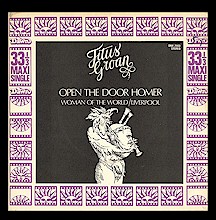
I've never seen or heard it, but there short recording catalog includes a three track maxi-single
- 1970's "Open the Door Homer" and "Woman of the World" b/w "Liverpool" (Dawn catalog number DNX 2503)
Since both efforts were released in 1970, I'm not sure if the 45 predated their LP, or was released afterwards. My guess is it was released prior to the album.
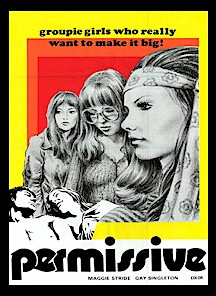
For anyone interested, the band had a song "Can't Find the Words to Say" included in Lindsey Shonteff's 1970 exploitation film "Permissive".
The album's been reissued multiple times
including a 1989 pressing by the English See for Miles label which
added the three maxi-single sides under the title "Titus Groan
... Plus" (See for Miles catalog number SEE 260 vinyl and CD
SEE 260 CD format). After the band broke up Cowell joined a number of bands including Paul Brett's Sage.
In the late-'70s Toomey reappeared in a series of bands including Satisfaction, Dragonfly, The Tourists and Paul Shane and the Yellowcoats.
© Scott R. Blackerby November 2025
|
BACK TO BADCAT PAYMENT INFORMATION

 nd's
woodwinds and sax added a progressive sheen to portions of the album;
particularly the extended suite "Hall
of Bright Carvings" and the instrumental segment of Lee's "I Can't
Change". The thing is that
sheen was on top of fairly conventional material like
"It's All Up with Us"
and the closer "Fuschia". That
dichotomy seemingly put them in a bind. Progressive fans likely found
the album too commercial. Pop fans probably found the album too
progressive. Others will disagree, but personally I'm happy with the album's
diversity. As for the band, as the lead vocalist Cowell exhibited considerable enthusiasm for the
material and the combination of a commercial voice and several strong
melodies resulted in about half the album being quite radio-friendly.
He was a decent guitarist, but just didn't get that much time in the
spotlight. Same comments applied to his keyboards. The
Lee - Toomey rhythm section was solid, with Toomey turning in some nice work
on tracks like the opener "It Wasn't for You".
And then there was Priestland. Normally I'm not a big fun of brass, or
woodwinds, but in this case every song was made stronger by his
contributions.
nd's
woodwinds and sax added a progressive sheen to portions of the album;
particularly the extended suite "Hall
of Bright Carvings" and the instrumental segment of Lee's "I Can't
Change". The thing is that
sheen was on top of fairly conventional material like
"It's All Up with Us"
and the closer "Fuschia". That
dichotomy seemingly put them in a bind. Progressive fans likely found
the album too commercial. Pop fans probably found the album too
progressive. Others will disagree, but personally I'm happy with the album's
diversity. As for the band, as the lead vocalist Cowell exhibited considerable enthusiasm for the
material and the combination of a commercial voice and several strong
melodies resulted in about half the album being quite radio-friendly.
He was a decent guitarist, but just didn't get that much time in the
spotlight. Same comments applied to his keyboards. The
Lee - Toomey rhythm section was solid, with Toomey turning in some nice work
on tracks like the opener "It Wasn't for You".
And then there was Priestland. Normally I'm not a big fun of brass, or
woodwinds, but in this case every song was made stronger by his
contributions.